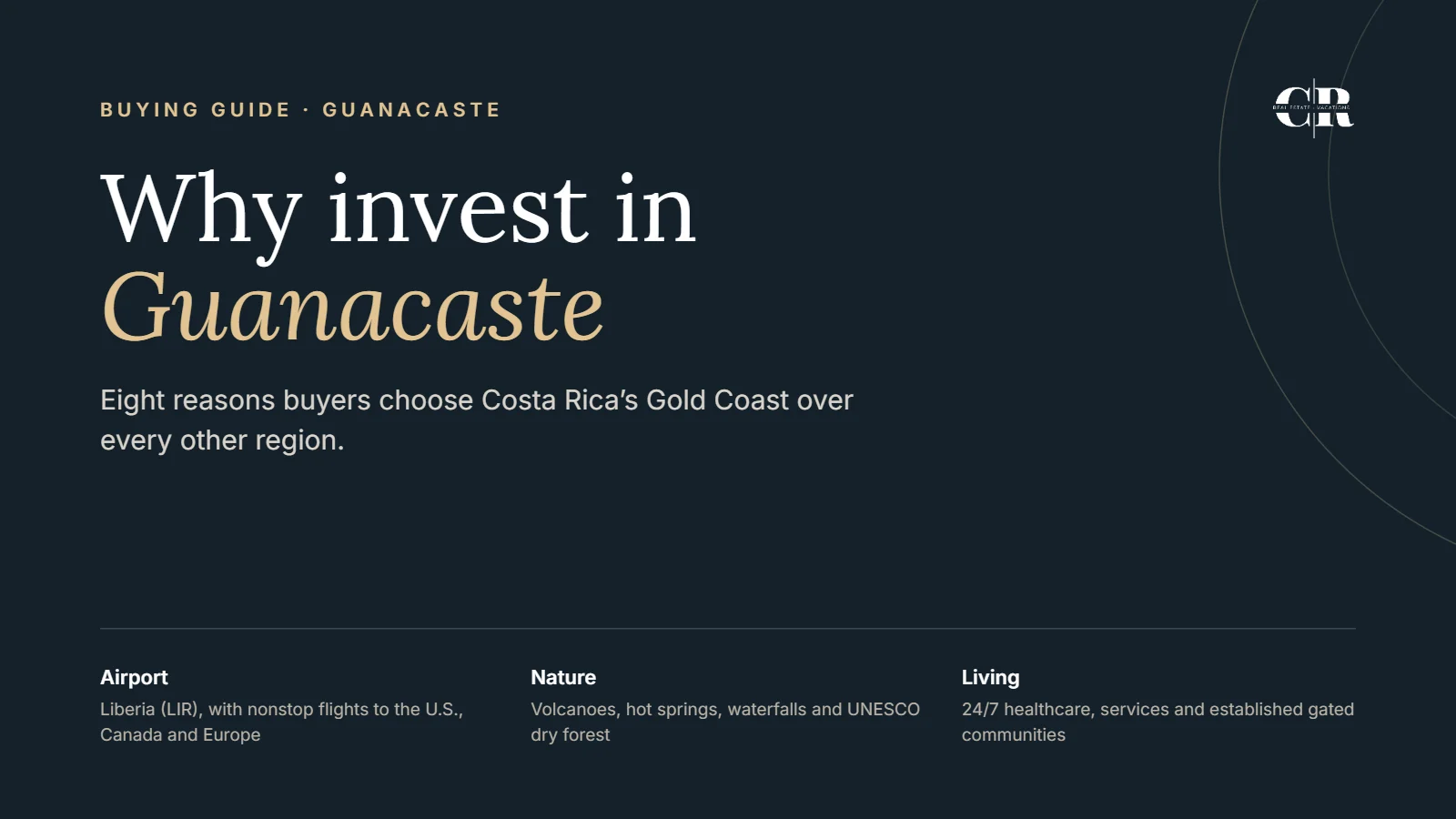
Costa Rica has beautiful places from the Caribbean to the southern Pacific, but when buyers compare regions side by side, Guanacaste keeps coming out on top. It is not just the beaches. It is the combination of an international airport, real infrastructure, healthcare, nature and established communities that makes owning here easier, and that helps a home hold its value. Here is why I tell my clients to start their search in Guanacaste.
1. An international airport close to the beach
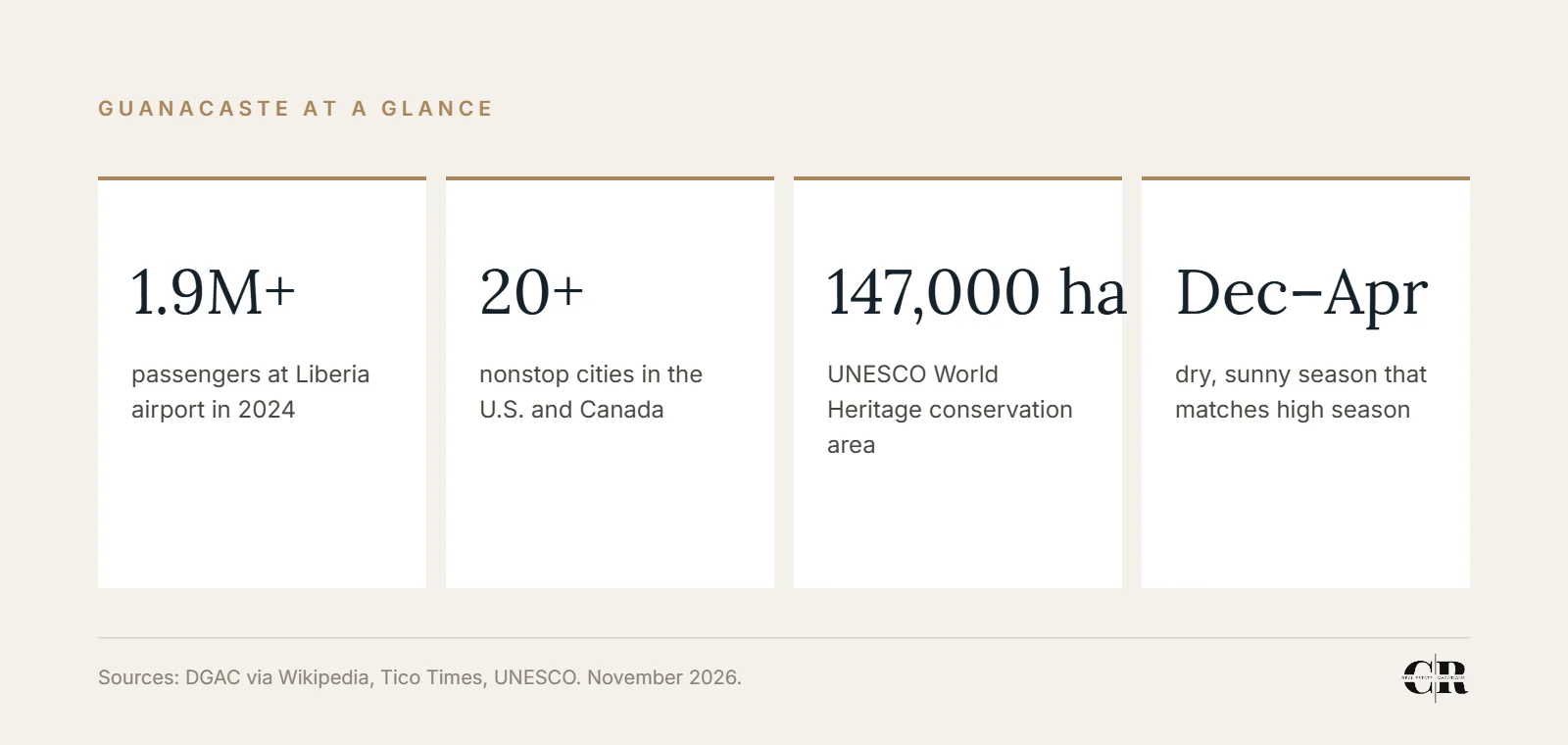
Guanacaste International Airport (LIR) in Liberia is the country’s second international gateway. It handled more than 1.9 million passengers in 2024 and had its best first quarter ever in 2026, with nonstop flights to more than 20 cities in the United States and Canada, plus seasonal service to Zurich. Many of the best communities are 20 minutes to about an hour from the terminal.
Compare that with the southern Pacific or the Caribbean, where most international visitors still fly into San José and drive three to five hours. For an owner, a short trip from the plane to the pool means more visits, easier rentals and guests who come back.
2. The sunniest, driest climate in the country
Guanacaste has a long dry season, roughly December to April, with sunny days that match the high season for North American travelers. Even in the green season, mornings are usually clear. Less rain also means less wear on your home and fewer road problems than in the wetter regions of the country.
3. Some of Costa Rica’s most famous beaches
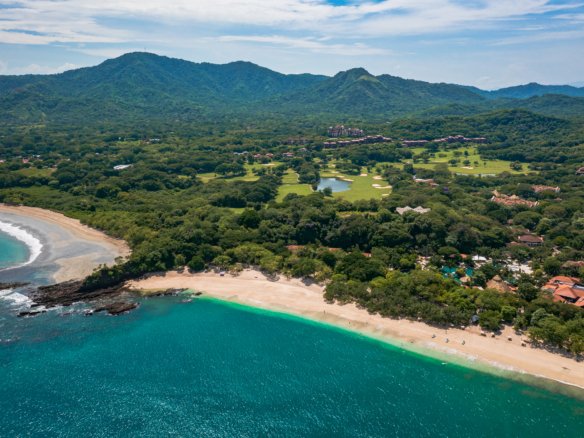
Playa Conchal, Flamingo, Tamarindo, Avellanas, Langosta, Hermosa and the bays of Papagayo are all on this coast. You can pick calm water for swimming and boating, consistent surf, or quiet coves, often within a short drive of each other.
4. Volcanoes, waterfalls, hot springs and dry forest
- Rincón de la Vieja: an active volcano with hiking trails, mud pots, waterfalls such as La Cangreja and Oropéndola, and hot springs.
- Miravalles: another volcano with thermal pools and spas around it.
- Llanos de Cortés: one of the country’s best-known waterfalls, a short drive from Liberia.
- A UNESCO World Heritage Site: the Área de Conservación Guanacaste protects one of the largest tropical dry forests left in Central America, about 147,000 hectares of land and sea.
- Wildlife: howler monkeys, coatis, iguanas, more than 500 bird species in the conservation area, and leatherback turtles nesting at Playa Grande.
5. Costa Rica’s strongest tourism infrastructure
Guanacaste has one of the largest concentrations of high-end hotels and resorts in Central America, including the Four Seasons, Andaz, the JW Marriott and the W, along with championship golf courses, marinas and beach clubs. For owners, that means trained staff, restaurants, property managers and a steady flow of high-spending visitors, which supports vacation rental demand.
6. Healthcare, shopping and services
Liberia has 24/7 private healthcare: Hospital Metropolitano has a full hospital in Liberia that accepts international insurance and opened a new operating room in 2026, Clínica Bíblica is acquiring Hospital San Rafael Arcángel, and there are private clinics near the beach towns such as Huacas. The public Hospital Dr. Enrique Baltodano serves the province. Supermarkets, banks, hardware stores and shopping centers in Liberia and around Tamarindo and Flamingo mean you don’t have to drive to San José for everyday needs.
7. Established gated communities
Much of Guanacaste’s luxury market is in master-planned communities such as Hacienda Pinilla, Reserva Conchal and Península Papagayo, with security, water, maintained roads, beach clubs and HOAs that protect the standard of the neighborhood. These are hard to find at the same level elsewhere in the country. Read more in why buy in a gated community in Guanacaste.
8. Demand that supports value
Good land with water, access and permits is limited, and airport traffic keeps growing, with the National Airport Plan projecting that passenger numbers could triple over the next 25 years. The luxury segment did adjust after its 2024 peak, which has made pricing more realistic, and analysts expect steady gains for well-located beach homes and condos. In my experience, homes in established communities close to the beach and the airport are the ones that hold their value best and rent best.
How Guanacaste compares
- Central Valley: great for full-time living near San José and the main hospitals, but it is not a beach lifestyle and is less suited to vacation rentals.
- Central Pacific (Jacó, Herradura): close to San José and busy on weekends; more rain and fewer master-planned luxury communities.
- Southern Pacific (Dominical, Uvita, Ojochal): lush and beautiful, but far from an international airport and with fewer services.
- Caribbean: authentic and relaxed, with lower prices, but more rain, less infrastructure and a long drive from any international airport.
Frequently asked questions
Is Guanacaste only for vacation homes? No. Many owners live here full time, especially around Liberia, Tamarindo, Flamingo and Hacienda Pinilla, where schools, healthcare and services are close.
How far is the beach from Liberia airport? Papagayo is about 25 minutes away; Flamingo, Conchal and Tamarindo are about an hour; Hacienda Pinilla is a bit more.
What does a home cost? It depends on the community. See our Hacienda Pinilla vs. Reserva Conchal price per square foot comparison, or browse all listings.
If you are comparing regions, I’m happy to walk you through the options, show you homes in person or on video, and help you through the purchase. Read our guide to buying as a foreigner and how attorneys, notaries and escrow work, or contact Leo.
Figures as of November 2026 from public sources such as the Tico Times and UNESCO. Market conditions change; this is general information, not investment advice.