
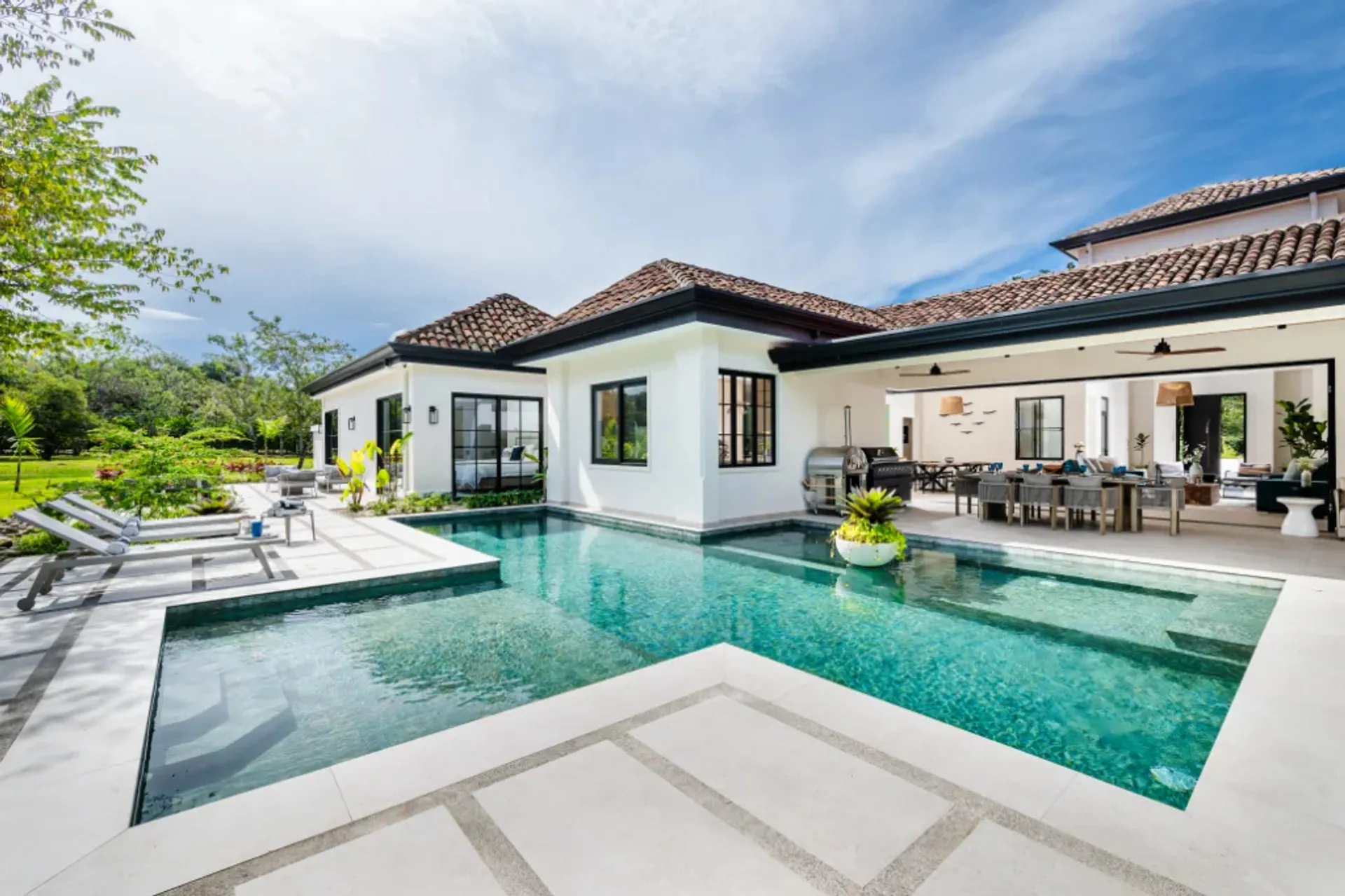
Most luxury homes in Guanacaste are still bought in cash, but that is no longer the only option. Today a foreign buyer can choose between U.S.-style 30-year mortgages for Costa Rica, local banks, developer and seller financing, equity from a home back home, and even bitcoin converted at closing. Each route has different requirements, timelines and property limits. This guide compares them so you can plan your purchase in Hacienda Pinilla, Reserva Conchal, Playa Flamingo or Papagayo with the right structure from day one.
Quick comparison
| Option | Who it suits | Typical down payment | Typical timeline |
|---|---|---|---|
| U.S.-style lenders (Second Street, Volo Loans) | U.S. citizens and residents; Canadians with Second Street | From 25% | About 4 to 8 weeks |
| Costa Rican banks (BAC, Promerica, BCR, Lafise, BCT) | Residents and buyers with local income or banking history | Often 30% to 50% for non-residents | About 3 to 6 months |
| Developer or seller financing | Pre-construction, lots and properties banks won’t finance | Negotiated | Same as the purchase |
| Equity from your home country | Owners with equity or investment portfolios | Paid as cash in Costa Rica | Depends on your lender |
| Bitcoin converted to dollars | Buyers holding BTC | Paid as cash in Costa Rica, plus about 5% commission with DP Solutions | Days, after compliance checks |
1. U.S.-style mortgages for Costa Rica
The biggest change in the market is the arrival of lenders that offer U.S.-style mortgages, in U.S. dollars, on Costa Rican homes. For most North American buyers this is now the most practical way to finance a completed home.
Second Street
- Who can borrow: U.S. citizens, U.S. permanent residents and Canadian citizens.
- Loan: 30-year fixed rate in U.S. dollars, with no prepayment penalty. Purchase, refinance and cash-out refinance.
- Down payment and amounts: generally at least 25% down; minimum loan of $150,000, with loans above $2 million subject to additional review.
- Credit: generally a minimum 720 FICO score.
- Property: fully completed houses, townhomes and condos on titled land, as a primary residence, second home or investment. It does not finance land, construction or unfinished properties, although it can work with developers on completed new construction.
- Timeline: typically 4 to 6 weeks from pre-qualification to closing, with escrow on every transaction.
- Structure: loans are provided by Second Street CR, S.R.L., a private lender registered with SUGEF, Costa Rica’s financial regulator.
Volo Loans
- Who can borrow: U.S. citizens and U.S. permanent residents.
- Loan: 30-year fixed, 7/6 ARM and 5/6 ARM options, all on 30-year amortization, with no balloon payments and no prepayment penalties. Purchase and cash-out refinance.
- Down payment and amounts: minimum 25% of the lower of price or appraised value (up to 75% loan-to-value); minimum loan of $100,000. The down payment can come from U.S. assets.
- Credit and reserves: minimum 680 FICO score, U.S. credit only, and about six months of reserves.
- Property: vacation homes, single-family homes, condos, investment properties and lots intended for future construction. Concession properties are not financed, with the exception of Papagayo.
- Timeline: as little as 45 days.
Rates for both lenders depend on your credit, loan-to-value and income, and are not published, so request a quote early in your search.
2. Costa Rican banks
Banks such as BAC San José, Banco Promerica, Banco de Costa Rica (BCR), Banco Lafise and Banco BCT do offer mortgages, in U.S. dollars or colones, with terms of up to 20 or 30 years. In practice they are best suited to residents or to buyers with local income or a banking history in the country. For non-residents, expect:
- A larger down payment, often 30% to 50%, and approval that depends heavily on your profile.
- Foreign documents apostilled and translated into Spanish, plus income and bank statements.
- Mandatory life insurance with the bank as beneficiary, which may require a medical exam.
- A longer process, usually 3 to 6 months, which rarely fits a standard closing timeline.
- Closing costs on the loan, including mortgage registration, notary fees and an appraisal.
Rates and terms change often and differ between banks, so it is worth comparing at least two quotes. If you plan to live in Costa Rica and become a resident, a local bank can become a good option later, for example to refinance.
3. Developer and seller financing
Many new projects sell with a payment schedule during construction instead of a mortgage. At Solea Papagayo, for example, a 5% deposit reserves a unit, with the balance paid according to the developer’s schedule. Some private sellers also finance part of the price over a few years. This route is especially useful for lots, pre-construction and properties that banks will not finance. Have your attorney review the rate, payment dates, any final balloon payment, the guarantee and what happens in case of default.
4. Equity from your home country
Some buyers finance in their home country and pay cash in Costa Rica: a home equity line (HELOC), a cash-out refinance of a home they already own, or a loan against an investment portfolio. You negotiate as a cash buyer, but your existing property or portfolio secures the loan, so review the risk and the tax implications with your advisor.
5. Buying with bitcoin
Costa Rican property is registered and closed in dollars or colones, so a bitcoin purchase works by converting BTC to fiat before closing. Specialized firms such as DP Solutions, with offices in Costa Rica and the United States, offer bitcoin liquidity and settlement services for real estate purchases. Their process works like this:
- Compliance first: identity verification (KYC/AML) and an analysis of the origin of the funds on the blockchain.
- Conversion: the bitcoin is sold for U.S. dollars through an OTC desk.
- Escrow: the dollars are wired to a Costa Rican escrow and released when the purchase deed (escritura) is signed.
- Cost: DP Solutions charges a commission of about 5% to convert bitcoin to cash. To close a $1,000,000 purchase, plan on roughly $1.05M in bitcoin at the day’s price.
- Timing: a direct conversion to a U.S. account typically settles within 24 to 72 hours once compliance checks are cleared; escrow and trust structures can take longer.
Three practical points: include DP Solutions’ 5% commission in your budget and plan the conversion before you sign the purchase agreement, so the exchange rate doesn’t change your budget; keep a clear record of how and when you acquired the bitcoin, because banks and escrow agents will ask for the source of funds; and talk to your tax advisor, since selling bitcoin can trigger capital gains tax in your country. As with any financial provider, check fees, timelines and references before you commit.
Which option fits you?
- A completed home on titled land: start with Second Street or Volo Loans.
- A lot or pre-construction: developer or seller financing, home-country equity, or Volo Loans for some lots.
- Papagayo concessions: confirm early which lenders accept the property; Volo Loans lists Papagayo as an exception to its concession rule.
- You live in Costa Rica or have local income: compare a local bank with the U.S.-style lenders.
- You hold bitcoin: convert through a regulated off-ramp into escrow and close as a cash buyer.
Frequently asked questions
Can foreigners get a mortgage in Costa Rica?
Yes. U.S.-style lenders such as Second Street and Volo Loans lend to U.S. buyers (and Canadians, in the case of Second Street) with a 25% down payment, and Costa Rican banks can lend to non-residents, usually with a larger down payment and a longer process.
How much do I need for a down payment?
Plan on at least 25% with U.S.-style lenders, and often 30% to 50% with Costa Rican banks if you are not a resident, plus closing costs.
Can I finance a lot or a home under construction?
Second Street only finances completed homes on titled land. Volo Loans accepts lots intended for future construction. For pre-construction, developer payment schedules are the most common route.
Can I buy property in Costa Rica with bitcoin?
Yes, by converting the bitcoin to dollars through a specialized provider such as DP Solutions, which charges about 5%, and paying through a Costa Rican escrow. The deed and the registry record the price in fiat currency.
Ready to plan your purchase?
I can introduce you to these lenders, coordinate with your attorney and escrow, and help you choose properties that fit the financing you have in mind. Read our step-by-step buying guide, explore our luxury listings or contact Leo for a private consultation in English or Spanish.
This article is general information as of November 2026, based on each lender’s published information. It is not financial, legal or tax advice. Terms, rates and eligibility change; confirm the details directly with each lender and your advisors.

